
20.06.2024
I am an active pagan and a researcher in both sustainability and theology, where I focus on religious environmentalism (eg. 1,2).
Whilst I support the overall aims of JSO in drawing attention to the climate crisis, it is perhaps worth noting that Stonehenge is considered to be a sacred temple to many of us that follow the pagan path, and is not just a tourist attraction.
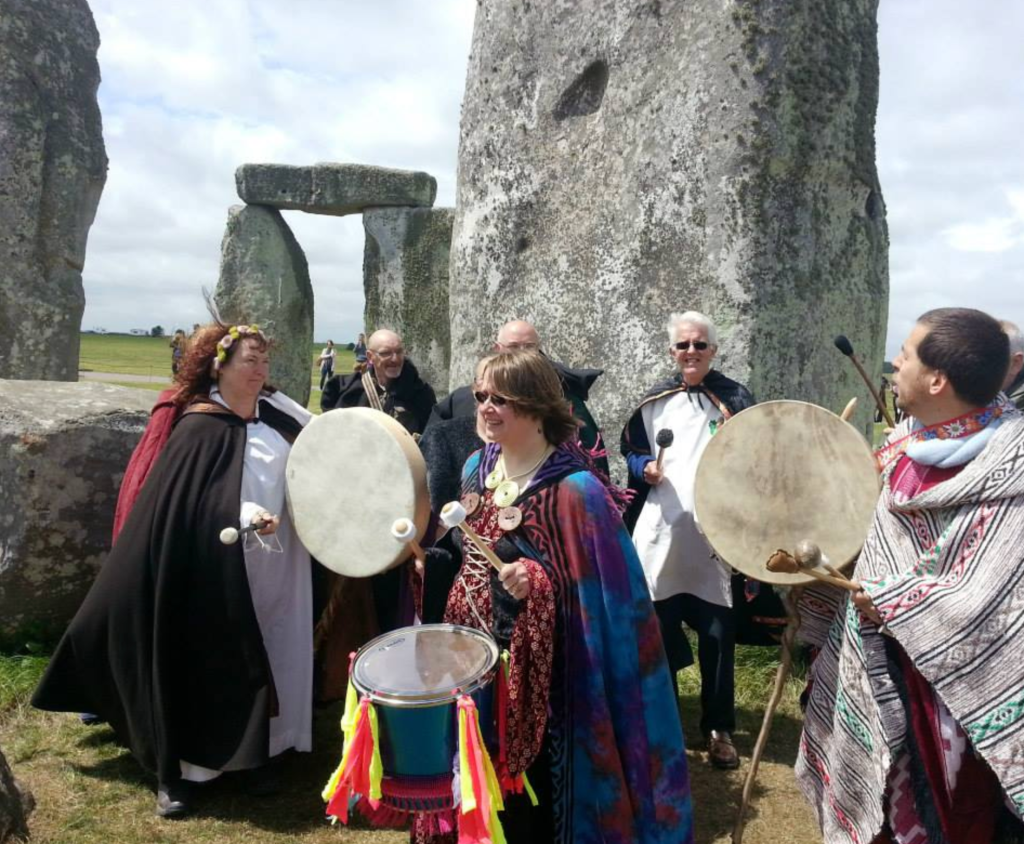
( Photo by D. Wright)
I consider this action to have been ill-judged in that it can be interpreted as either a hate crime against the pagan community, or the perpetuation of the myth that these sites are mere tourist attractions and are not the sacred places that they are for many of us pagans.
Firstly, the pagan community is rapidly growing (3) and there has been substantial research on the topic of dark greening of religion (4) which shows that those following a pagan path tend to claim to be highly engaged in environmentalism (5). Engaging in any form of action which alienates a group of people based on their spiritual beliefs is bemusing at the very least, especially considering the close ties many pagans have with environmental action (6,7). Why was a church not targeted just before Christmas, or a mosque not targeted during Eid, or a Synagogue during Hannukah? Did me asking this trigger something in you? And yet it is ok to target a pagan sacred site?
Naturally, one has to only look at some of the photos after public ceremonies at the solstice to question pagan claims of environmentalism, based on the large amounts of rubbish that are left strewn around. Indeed, in the case of Avebury, the collection of ritual rubbish on a regular basis is considered not just necessary but vital, with many of the “offerings” being artificial and damaging to the environment.

(photo N. Kenyon)
This can be illustrated by a recent clean-up of the Tolkien trees in Avebury, in which 13 people (many of which were active in the pagan community) spent a collective 24 hours cleaning “sacred” cable ties, poo bags, lanyards, a mobile phone charging cable, a nappy and a pair of purple and lace knickers amongst hundreds of synthetic ribbons. In fact it is estimated that 99% of the offerings were made from nylon… which is a form of micro plastic, made from crude oil. These “offerings” are not at all in-keeping with the majority of pagan beliefs and are a form of vaccuous action which in this case certainly resonates with what JSO just did.

(Photo N. Kenyon)
The big difference is that they cannot be seen as a form of hate crime, whereas deliberately defacing a sacred site in my mind most certainly is.

(Photo N. Kenyon)
Perhaps the activists of JSO were unaware that this is a site which is still in use for spiritual purposes?
I would encourage JSO to reach out to the pagan community and to apologise for the desecration of a sacred site, and perhaps to ask for permission to attend a pagan ceremony in the spirit of understanding why this action has been perceived as so hateful by many of us pagans. We have been persecuted for more than 500 years and are still here, and as a sustainability researcher I appreciate the need to highlight the climate crisis, but targeting spiritual sites is also a hate crime. Do you want to be known for that?
References
- Hearn, A.X., Huber, F., Koehrsen, J. and Buzzi, A.L., 2024. The perceived potential of religion in mitigating climate change and how this is being realized in Germany and Switzerland. Journal of Environmental Studies and Sciences, pp.1-16.
- Hearn, A., Buzzi, A.L., Malin, J. and Koehrsen, J., 2024. Sustainable development through religious environmental engagement? Evidence from Switzerland. Sustainable Development.
- https://www.commentary.org/articles/liel-leibovitz/paganism-afflicts-america/
- Taylor, B., 2008. From the ground up: Dark green religion and the environmental future. Ecology and the Environment: Perspectives from the Humanities, pp.89-107.
- Sommerlad-Rogers, D., 2013. Environmental Attitudes and Behaviors among Pagans. Pomegranate, 15.
- McClymont, K., 2019. Neo-paganisms,‘dark green religion’and what the divine feminine might mean for planning. In Gender and Religion in the City (pp. 161-174). Routledge.
- Rountree, K., 2012. Neo-paganism, animism, and kinship with nature. Journal of Contemporary Religion, 27(2), pp.305-320.
 Adam X. Hearn
Leave a comment